
Choosing a Renovation Contractor Brockville
A good renovation is easy to spot when the work is finished. Tight trim lines, cabinets that fit the room properly, stairs that feel solid underfoot, and a layout that works better than what was there before. What is harder to spot at the start is whether a renovation contractor Brockville homeowners are considering can actually deliver that level of work from planning through final details.
That decision matters more than any single material or fixture. Homeowners often compare quotes, timelines, and product allowances first, but the quality of the contractor shows up in the parts of the project that are harder to price on paper - problem-solving, finish quality, communication, sequencing, and respect for the house itself.
For kitchen remodels, built-in storage, stair replacements, basement upgrades, or exterior improvements, the right contractor is not simply the one who says yes to the job. It is the one who understands how to build cleanly, coordinate trades properly, and finish the work in a way that still looks right years later.
What a renovation contractor in Brockville should actually bring to the job
A contractor is not just there to supply labor. On a well-run renovation, the contractor is responsible for the rhythm of the entire project. That includes planning the order of work, managing site conditions, identifying issues early, and making sure visible finish work is not treated like an afterthought.
This is especially important in homes where renovation work connects structural changes, mechanical updates, and finish carpentry. A kitchen may need framing adjustments, electrical changes, flooring transitions, cabinetry installation, trim work, and final fitting around walls that are not perfectly straight. A staircase project may look straightforward until the existing structure is opened up and tolerances start to matter. In these cases, craftsmanship and coordination are tied together.
A dependable contractor should be able to explain not only what will be built, but how it will be built. That does not mean overcomplicating the conversation. It means being clear about approach, materials, schedule, and where custom work may be the better choice than an off-the-shelf solution.
Why finish carpentry experience matters in renovation work
Not every renovation depends on custom carpentry, but many of the best ones do. Homes feel more complete when the built elements fit the room instead of forcing the room to fit standard products. That is where a contractor with hands-on carpentry skill stands apart.
In practical terms, that can mean built-in cabinetry that uses awkward wall space well, stair components that are made to suit the proportions of the home, or trim and casing details that tie a remodeled area into the rest of the house. It can also mean avoiding the common patchwork look that happens when a project is assembled from disconnected trades with no attention to finish consistency.
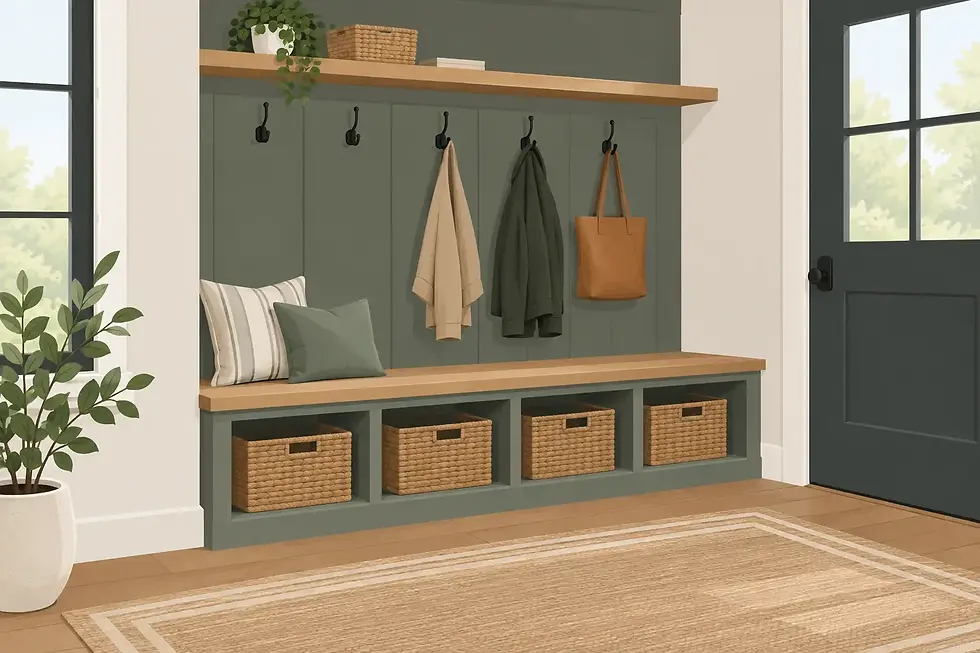
For homeowners investing in kitchens, mudrooms, living room built-ins, or deck construction, this level of detail has real value. It improves appearance, but it also improves function. Storage works better. Transitions feel intentional. Exterior features hold up better when the structure and finish are both taken seriously.
How to assess a renovation contractor Brockville homeowners are considering
The first thing to look for is relevant project experience. A contractor may be generally capable but still not be the right fit for your specific type of work. A full bathroom refresh is different from a custom kitchen. A deck replacement is different from a staircase rebuild. Ask whether they regularly handle projects like yours, not just whether they are willing to take it on.
The second is how they talk about the work. Good contractors can explain scope in a clear, grounded way. They should be able to discuss materials, sequencing, likely challenges, and where budget decisions will affect the outcome. Vague language at the estimate stage often leads to confusion later.
The third is evidence of finish quality. Photos help, but they should show more than wide-angle room shots. Look for detail work - how trim meets corners, how cabinets align, how stair parts fit together, how deck boards are laid out, and whether the finished result looks considered rather than rushed.
The fourth is whether the contractor seems prepared to manage the whole job. Some projects only require a narrow scope. Others need broader coordination. If plumbing, electrical, drywall, flooring, tile, and finish carpentry all need to happen in sequence, project management is as important as the build itself.
Quotes matter, but scope matters more
Homeowners naturally compare numbers. That makes sense, but renovation pricing only means something when the scope is truly comparable. One quote may include demolition, disposal, trim replacement, painting prep, and finish corrections, while another may leave those items out or treat them as extras later.
This is where many projects go sideways. A lower starting quote can become the more expensive choice if the allowances are unrealistic or the scope is too thin. On the other hand, the highest price is not automatically the best either. The real question is whether the contractor has priced the job with enough care to carry it through properly.
Ask direct questions. What is included? What is excluded? What assumptions are built into the quote? How are changes handled if hidden conditions are found? Renovation work often involves unknowns, especially in older homes. A good contractor will not pretend those risks do not exist. They will explain how they are addressed.
The trade-off between speed, cost, and quality
Most homeowners want all three. Fast scheduling, controlled cost, and high-end results. Sometimes that balance is possible, but often there is a trade-off.
Custom work takes time. Careful prep takes time. Coordinating multiple stages without damaging completed finishes takes time. If a contractor promises a highly detailed project on a very short schedule at a very low price, that should raise questions.
That does not mean every project has to move slowly. It means the timeline should match the work. A contractor who builds with precision will usually be more realistic about lead times, material delays, and the order in which things need to happen. That realism is not a weakness. It is often a sign that the project is being taken seriously.
Renovations that benefit most from a craftsmanship-led contractor
Some projects can be handled with a straightforward install approach. Others benefit from a contractor who can build and adapt on site.
Kitchens are a strong example because they combine layout decisions, appliances, cabinetry, lighting, trim, and finish transitions in one space. Built-ins are another, especially when storage needs to match an existing room rather than a catalog dimension. Staircases also demand accuracy. Small errors in rise, run, alignment, or finish become obvious every day.
Exterior work has similar demands. A deck should not only look good when completed. It should be framed correctly, tied into the house properly, and finished in a way that stands up to weather and regular use. These are not cosmetic details. They affect durability and long-term value.
That is why many homeowners prefer working with a contractor who combines renovation capability with strong carpentry skill. Heritage Green Carpentry fits that model by handling renovations with the attention to detail expected from a finish carpenter, not just a general labor crew.
What a better renovation experience usually looks like
The best renovation projects are not the ones without any surprises. They are the ones where issues are handled well. A wall is opened and something unexpected is found. A floor is less level than expected. A layout adjustment makes more sense once demolition begins. These things happen.
What homeowners remember is whether the contractor stayed organized, communicated clearly, and kept the standard of work consistent. That is the difference between a stressful project and one that feels well managed even when conditions change.
A good contractor also respects that this is your home, not just a job site. Clean work habits, orderly staging, thoughtful scheduling, and careful attention to visible finishes all signal professionalism. Those habits tend to come from pride in the trade, not from marketing.
If you are planning a renovation in Brockville, take the time to look past the first quote and the first promise. Ask how the work will be built. Ask to see the quality of finished details. Ask who is actually coordinating the job. The right contractor should leave you with confidence not because the pitch sounds polished, but because the work itself is clearly understood.
The best renovations rarely happen by accident. They come from careful planning, skilled execution, and a contractor who treats both structure and finish as part of the same standard.


Comments