
How to Budget Custom Cabinetry
Sticker shock usually shows up at the same point in a cabinetry project - right after you realize that "custom" does not just mean picking a paint color. It means size, layout, materials, finish, hardware, installation, and the level of detail you expect when the work is done. If you are trying to understand how to budget custom cabinetry, the key is to look past a single bottom-line number and break the project into the decisions that actually drive cost.
That matters because cabinetry is not a throw-in detail. In a kitchen, mudroom, office, or living room built-in, cabinets often define how the room works and how it looks for years. Budgeting well is less about finding the cheapest route and more about deciding where custom work will give you the most value.
How to budget custom cabinetry without guessing
The biggest mistake homeowners make is treating cabinetry like a fixed-price product. It is not. Custom cabinetry is a build process, and the cost shifts based on scope, finish level, and site conditions.
Start with the project size. A single built-in bench with storage is a very different budget from a full kitchen with pantry walls, an island, and appliance panels. Then look at complexity. Straight runs of cabinets are simpler to build and install than corner layouts, uneven walls, sloped ceilings, or spaces that need cabinetry tied tightly into trim, flooring, and mechanicals.
The finish level matters just as much. Painted shaker doors, flush slab fronts, inset doors, natural wood grain matching, integrated lighting, and specialty organizers all carry different labor and material demands. Two cabinetry projects can occupy the same wall and still land in very different price ranges.
A practical way to budget is to divide the project into five parts: design and planning, cabinet box construction, doors and drawer fronts, hardware and accessories, and installation with finishing work. Once you see those pieces separately, the estimate starts to make sense.
What drives the cost of custom cabinetry
Materials are the first major factor, but not always in the way people expect. Cabinet interiors are often built from plywood or quality sheet goods, while visible surfaces may be painted MDF, veneer, or solid wood depending on the design. Solid wood is not automatically the right choice for every part of a cabinet. In many painted applications, stable engineered materials perform better and finish more consistently.
Door style has a strong effect on labor. A simple slab door is generally less labor-intensive than a detailed raised panel or true inset door. If you want tight reveals, crisp alignment, and a furniture-grade finish, you are paying for precision, not just raw material.
Drawers also affect budget more than many homeowners realize. Good drawer boxes, quality slides, soft-close hardware, and durable joinery improve daily use, but they add cost quickly when repeated across a full kitchen or wall unit. The same goes for pull-out organizers, tray dividers, spice storage, garbage pull-outs, and hidden charging or appliance garages.
Finish is another major variable. Paint-grade cabinetry can be straightforward, but achieving a smooth, durable painted finish still takes careful prep and spraying. Stained or clear-finished wood adds another layer of select material choice because wood grain, tone, and consistency become part of the visible result.
Then there is installation. In older homes especially, walls are rarely perfectly straight, floors can be out of level, and corners may not be square. Custom cabinetry can solve those conditions beautifully, but making everything fit cleanly takes time. Scribing cabinets to walls, adjusting fillers, integrating trim, and finishing around appliances or existing architecture all affect labor.
Set your budget by priority, not by room alone
If your approach is simply, "I need cabinets in this room," you may end up spreading the budget too thin. It is usually better to decide what matters most in the space.
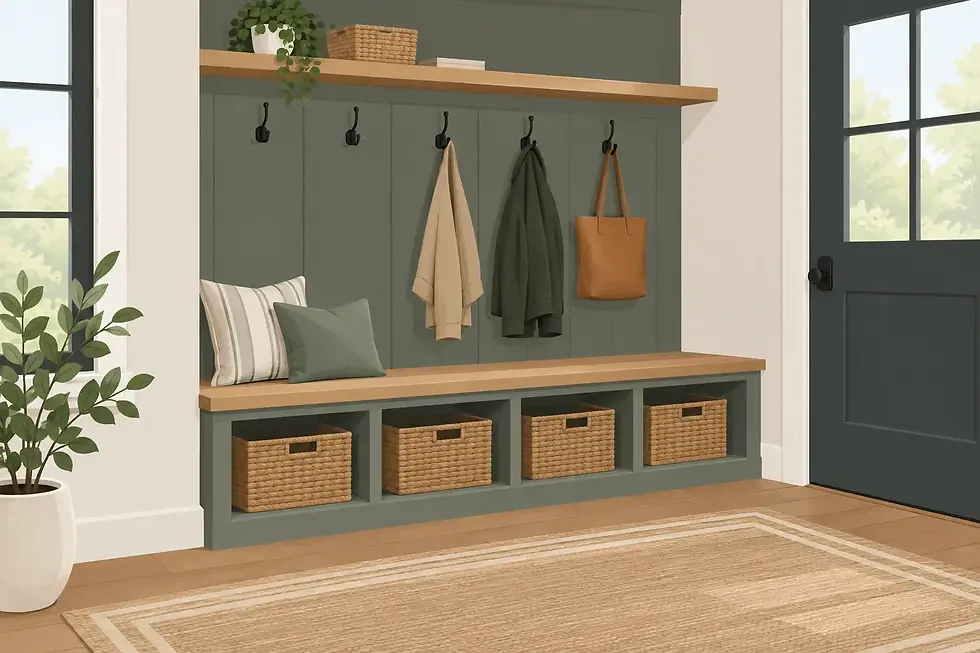
In a kitchen, that may mean putting more money toward the most visible wall, the island, or the pantry storage you use every day. In a mudroom, durability and function may matter more than premium interior accessories. In a living room built-in, the finish quality and proportions may be more important than maximizing every inch of concealed storage.
This is where trade-offs become useful. You might choose custom lower cabinetry paired with simpler shelving above. You might invest in better drawer hardware and use fewer specialty inserts. You might keep the exterior look highly tailored while simplifying cabinet interiors where it will not affect daily use.
A good budget is not about cutting randomly. It is about protecting the parts of the job that affect function, fit, and finish.
How to budget custom cabinetry for the right level of finish
Not every custom project needs the same level of refinement. That is not a quality issue - it is a scope issue.
For example, cabinetry in a laundry room or workshop may be custom-sized for the space but built with more practical finishes and simpler detailing. A kitchen or front-entry built-in often calls for more polished visible surfaces, more trim integration, and a more furniture-like result. Both can be built well, but they should not be budgeted the same way.
It helps to be honest about how the space will be used and seen. If the cabinetry is the focal point of the room, budget accordingly. If it is mainly serving storage in a low-visibility area, there may be room to simplify without sacrificing durability.
This is also where homeowners should think beyond cabinet construction alone. If the cabinetry project is part of a wider renovation, the final cost may be affected by flooring transitions, backsplash work, electrical relocation, lighting, drywall repair, or paint touch-ups. Cabinetry rarely lives in isolation.
Build a realistic allowance for design changes
Changes on paper are cheaper than changes in the shop or on site. That is true for cabinetry more than almost any other finish item.
Before work begins, make sure the layout, appliance sizes, storage needs, and finish selections are genuinely settled. Last-minute revisions to depth, door style, panel details, or built-in features can affect material orders and labor sequencing. Even a small change can ripple across multiple cabinet sections.
This is why a contingency matters. A realistic cabinetry budget should include room for adjustments, especially in renovation settings where hidden conditions may appear once demolition starts. If walls need repair, if measurements shift after other trades complete their work, or if an appliance specification changes, the cabinetry plan may need to adapt.
That does not mean the budget should be vague. It means it should be honest.
Where to save and where not to
There are sensible places to control cost. Repeating cabinet sizes where possible can help. Choosing a clean, standard door profile instead of a highly detailed one can help. Limiting specialty accessories to the areas where they truly improve use can help.
The places to be careful are the structural and functional basics. Cheap hardware, weak drawer construction, poor installation, and thin finishing work may reduce the quote, but they rarely reduce the long-term cost of ownership. Cabinets are touched every day. Doors sag, drawers rack, finishes wear, and poor fitting becomes obvious fast.
If you are investing in custom work, the value is in fit, durability, and visible quality. Saving money by stripping those out defeats the point.
For many homeowners, the smartest middle ground is not "luxury everything." It is a well-built cabinet package with durable materials, dependable hardware, and thoughtful custom features in the places that matter most.
Getting accurate estimates for custom cabinetry
The more clearly you define the project, the more useful the estimate will be. General requests like "custom kitchen cabinets" leave too much open to interpretation. Better information produces better numbers.
That means sharing room dimensions, inspiration images, appliance plans, preferred finishes, and any must-have storage features up front. It also helps to say what matters most to you: maximizing storage, achieving a built-in architectural look, matching existing millwork, or keeping to a firm renovation budget.
A craftsmanship-driven contractor should be able to explain what is included, what is optional, and where the cost sits in the build. That conversation matters as much as the number itself. A lower quote is not always a better quote if major elements are missing or if the finish standard is not the same.
For homeowners planning a custom kitchen, built-in wall unit, or whole-room cabinetry package, working with one contractor who understands both finish carpentry and the renovation context can reduce surprises. That coordination is often where budgets stay under better control.
Custom cabinetry is worth budgeting carefully because it is one of the few parts of a renovation that affects storage, workflow, and the character of the room all at once. The best approach is to decide what the space needs to do, what level of finish it deserves, and where custom work will improve your day-to-day life most once the room is in use.


Comments