
Mudroom Storage Renovation Ideas That Work Hard
A mudroom earns its keep in the first few minutes after everyone comes home. Wet boots collect by the door, backpacks land on the floor, coats migrate to dining chairs, and the dog needs a towel before getting farther into the house. The best mudroom storage renovation ideas address those daily habits with a layout that has a defined place for the things your household actually carries, wears, and drops.
For many Ontario homes, the mudroom also has to handle snow, sand, rain gear, sports equipment, and the steady traffic between the garage, yard, and kitchen. That calls for more than a row of hooks. A well-built mudroom combines practical storage, hard-wearing materials, and finish work that looks at home with the rest of the house.
Start With the Traffic Pattern, Not the Cabinet Style
Before choosing door profiles, paint colors, or baskets, look at how people enter and leave. A mudroom serving a garage entry has different demands than one opening to a backyard or front walk. The goal is to keep dirty, damp items near the door while allowing people to move through the room without blocking one another.
Measure the clear walking path first. Cabinet depth, a bench projection, and open doors can make a compact room feel much tighter than it appears on a plan. In a narrow pass-through, shallow upper cabinets and wall-mounted hooks may be a better choice than full-depth lockers on both sides. If the space is wide enough, a bench and tall storage wall create a more complete drop zone.
Think through the season with the most gear. If four people arrive home in winter, where do four coats, four pairs of boots, gloves, hats, school bags, and wet umbrellas go before anything is put away? Designing around that real moment prevents a beautiful mudroom from becoming a bottleneck.
Build Storage Around Each Person
Custom lockers are often the most effective part of a mudroom renovation because they give every family member a repeatable routine. A tall cubby or cabinet can hold a coat hook at a reachable height, an upper shelf for hats and seasonal items, and lower space for boots or a backpack.
Open lockers are convenient and encourage quick cleanup, especially for younger children. They also make the room feel more spacious. The trade-off is visual: if coats and bags are always visible, the room can look busy. Closed cabinet doors create a quieter appearance and protect stored items from dust, but they require more clearance and a little more effort at the end of the day.
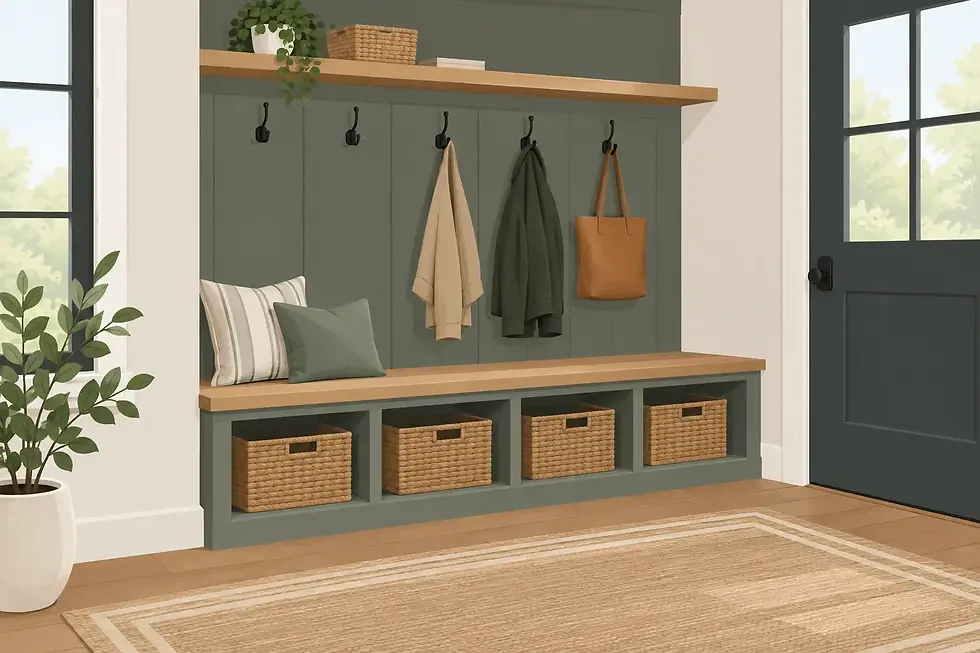
A practical middle ground is an open bench-and-hook section paired with closed upper cabinets. Daily items stay accessible, while spare gloves, lunch bags, dog supplies, and off-season gear disappear behind doors. For households with older children or frequent guests, a dedicated guest locker or a short run of extra hooks can be more useful than building every inch into permanent compartments.
Give Boots Their Own Zone
Boot storage is where many mudrooms fall short. Placing boots directly under a bench is simple, but it can become a damp pile in winter. A divided boot shelf, removable trays, or a low open cabinet helps keep pairs separated and contains grit and moisture.
Consider the tallest footwear in the home. Rubber boots and winter boots need more vertical clearance than shoes, and a shelf sized only for sneakers will quickly lose its purpose. In some homes, a pull-out tray is worthwhile because it makes the back of a deep cabinet accessible. In others, an open shelf is the more durable, lower-maintenance choice.
Make the Bench Useful, Not Just Attractive
A built-in bench gives people a place to sit while taking off shoes, but it can do more than that. Drawers below the seat are ideal for mittens, leashes, reusable bags, and smaller sports gear. Hinged bench tops provide large storage volume, though they are less convenient for items needed every day because the seat needs to be cleared before opening.
For a family mudroom, drawers tend to offer better organization than one large cavity. They let you separate equipment by activity and make it easier to find what is missing on a rushed morning. Use sturdy drawer hardware and durable drawer boxes. Mudroom storage gets opened, kicked, and loaded far more often than a decorative built-in in a living room.
The bench seat itself should be chosen for use. Painted hardwood, a durable laminate surface, or a well-finished wood top can all work. A removable cushion adds comfort but should be made from a fabric that can handle damp clothing, pet hair, and regular cleaning.
Use Vertical Space for Seasonal Storage
Ceilings are valuable real estate in a mudroom. Upper cabinets above lockers or a long shelf near the ceiling can store items that do not need daily access, such as extra paper towels, holiday gear, outgrown boots, or summer hats during winter.
Closed upper cabinets give the most finished look, especially when the mudroom is visible from the kitchen or main hallway. Open shelving costs less and can suit a more casual room, but it works best when the contents are limited to matching bins or a small number of useful items. Otherwise, open storage becomes another surface for clutter.
When building cabinetry to the ceiling, plan for how it will be used. Very high shelves are not the place for anything needed every week. A small step stool stored nearby can be sensible, but it should have a designated spot so it does not become another tripping hazard by the door.
Choose Materials That Can Take a Wet Winter
Mudroom finishes need to be selected for abuse, not just appearance. Floors should handle water, salt, grit, and repeated cleaning. Porcelain tile, quality vinyl, and certain sealed concrete finishes are common choices because they are easy to maintain. Wood flooring can work when it continues from an adjacent space, but it needs a durable finish and a realistic plan for mats and prompt cleanup.
At the walls, a washable paint finish is a baseline. Wainscoting, beadboard, or durable paneling behind hooks can protect the wall surface and give the room a more intentional finish. Hooks should be anchored into solid blocking or framing, not simply fastened to thin paneling or drywall. A winter coat bag can put surprising force on hardware.
Cabinet construction matters as well. Mudroom cabinetry is exposed to moisture from boots, gloves, and damp coats, so details around the base are worth discussing. A raised cabinet base, a recessed toe kick, and materials suited to the location can help protect the work over time. The right choice depends on the room's ventilation, floor drain situation, and how directly it connects to the outdoors.
Add the Small Details That Keep Order
The most effective storage details are often the least dramatic. A charging drawer keeps phones and tablets off the counter. A narrow mail slot or wall organizer stops papers from taking over the kitchen. A pull-out hamper can hold wet towels or sports uniforms until laundry day.
If pets use the same entrance, reserve a lower drawer or cabinet for food, leashes, grooming supplies, and towels. A simple lower hook for a leash is quicker to use than opening a cabinet when the dog needs to go out. For gardeners, a small utility cabinet for gloves, pruners, and seed packets can keep those supplies from drifting into the garage.
Lighting deserves attention too. Overhead lighting should clearly illuminate the floor and storage wall, while under-cabinet or interior cabinet lighting can make darker corners easier to use. A mudroom is a working room, and good lighting makes it safer on early mornings and winter evenings.
Plan the Renovation as Part of the House
A mudroom renovation can be a contained cabinetry project, but it often uncovers broader needs. Moving a wall may improve the entry path. New flooring may need to transition cleanly into the kitchen. Electrical work may be required for outlets, lighting, or a charging station. If laundry is nearby, plumbing and ventilation can influence the final layout.
That is why a custom plan should begin with the room's structure and daily use, then move into cabinetry and finish selections. A standard locker unit may fit the wall, but a tailored built-in can account for uneven walls, existing doors, ceiling height, trim details, and the exact equipment your household needs to store.
A mudroom does not need to be large to work well. It needs clear zones, durable surfaces, and carpentry built for the way your family comes and goes. When the bench, cabinets, hooks, and flooring are planned as one working system, the room quietly makes the rest of the house easier to live in.


Comments