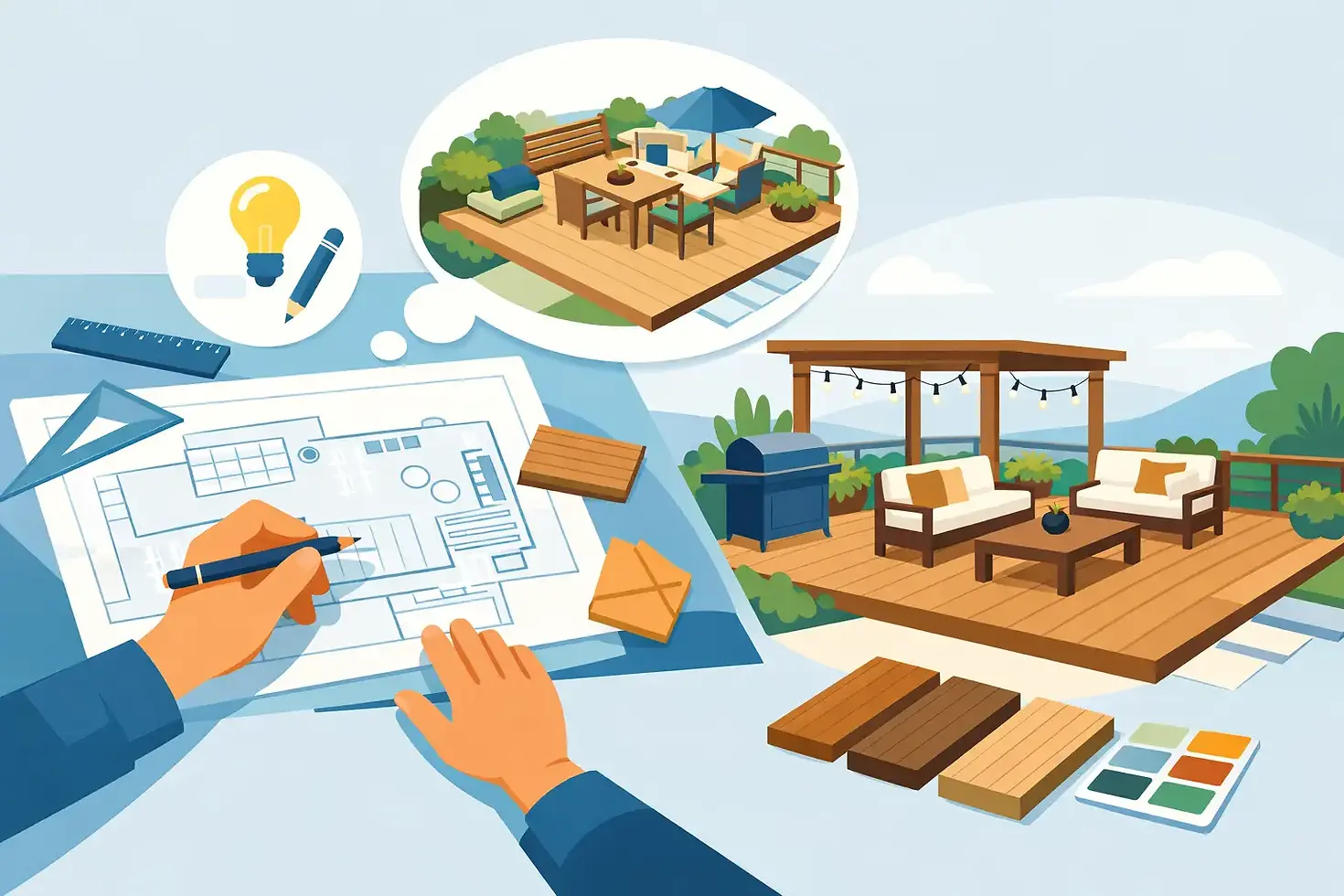
Planning a Custom Deck That Works
A deck looks simple from the yard. In practice, planning a custom deck is where the project is won or lost. The right plan gives you a deck that feels connected to the house, handles Ontario weather, and still works well years from now when furniture shifts, kids grow, or your routine changes.
Most deck problems start before the first post goes in. The deck is too small for how the family actually uses it. The stairs land in the wrong place. The railing blocks a view. The material choice looks good on day one but demands more upkeep than expected. Good planning avoids those misses and turns the deck into a real extension of the home rather than a platform tacked onto the back.
What planning a custom deck should solve
A custom deck is not just a size and a board color. It should solve a set of practical questions. How do you move from the house to the yard? Where do people gather? What needs sun, and what needs shade? Is the deck meant for quiet morning coffee, large family dinners, or a grill station that sees constant use?
Those answers shape everything else. A homeowner who entertains often may need wider traffic paths, room for a dining table, and stairs that let guests spread into the yard naturally. A family with young children may care more about rail spacing, gate options, and keeping sightlines open from the kitchen. If the deck is meant to support a hot tub, outdoor kitchen, or covered structure later, that needs to be addressed in the framing plan from the start.
This is why custom matters. A standard rectangle can be perfectly right for one house and completely wrong for another.
Start with how the deck will be used
Before materials or finishes come up, think about use in specific terms. It helps to picture a normal week, not just a summer holiday weekend. If you grill three nights a week, the cooking zone needs proper clearance, safe surface transitions, and enough room to work without pushing chairs aside. If you prefer low-maintenance outdoor seating, that points toward a different layout than a deck built around dining and hosting.
It also helps to think seasonally. In Ontario, a deck needs to perform through heat, rain, snow, and freeze-thaw cycles. That affects board spacing, drainage, stair traction, and the durability of the structure below the surface. A beautiful deck that holds water or ages unevenly is not a good custom build. Good planning balances appearance with how the deck will actually wear.
Size, shape, and connection to the house
One of the most common mistakes in planning a custom deck is treating the house as an afterthought. The deck should relate to door locations, window lines, and grade changes. It should feel intentional from inside the home as well as outside.
A deck that is too deep can darken interior rooms. A deck that is too shallow may fit furniture on paper but feel cramped in real use. Multi-level layouts can be useful on sloped lots or when separating dining and lounge areas, but they add framing complexity and cost. Sometimes a single, well-proportioned level does the job better.
Stair placement deserves more attention than people usually give it. Stairs influence traffic, safety, and yard layout. If they empty into a narrow side path or cut through the best part of the lawn, the whole yard can feel awkward. The same goes for built-in benches, privacy screens, or planters. These features can add function, but only when they support the layout instead of crowding it.
Choosing materials with the long term in mind
Material selection is where budget, appearance, and maintenance all meet. There is no perfect choice for every project. There is only the right choice for how you want the deck to look, feel, and age.
Pressure-treated lumber remains a practical option for many homeowners, especially when budget matters. It can perform well, but it needs proper detailing and ongoing maintenance to keep its appearance. Cedar offers a more refined natural look, though it also requires care and will weather over time.
Composite decking appeals to homeowners who want lower maintenance and a more consistent finish. That said, not all composite products perform the same way, and the substructure still matters just as much as the surface boards. Composite can also change the budget significantly, so it needs to be chosen with clear expectations.
Railings deserve the same level of thought. Wood, aluminum, and glass each create a different visual effect and maintenance profile. Glass can preserve views, but it needs cleaning and can raise costs. Aluminum is durable and clean-looking. Wood can suit a more traditional house, but it asks more of the homeowner over time.
Structure matters more than what you see
Homeowners naturally focus on finishes. Builders focus first on structure, and for good reason. The visible surface is only as good as the framing beneath it.
Footings, beam sizing, joist spacing, hardware, ledger attachment, and drainage details all affect how solid the deck feels and how long it lasts. This is especially important in climates where ground movement and moisture are part of the equation. A deck should not feel springy, trap water against the house, or show avoidable movement after a short time.
If future additions are possible, such as a roof structure, privacy wall, pergola, or hot tub, they should be discussed early. Retrofitting structural support later is often more expensive and less elegant than building with that capacity in mind from day one.
Planning a custom deck around code and permits
A well-built deck is not just attractive. It must meet structural and safety requirements. Height above grade, guard and railing requirements, stair geometry, footing depth, and attachment methods all need to align with local code.
For homeowners, this matters for more than compliance. Proper planning helps avoid redesigns, permit delays, and costly changes during construction. It also protects the long-term value of the property. If a deck is being built as part of a larger exterior improvement, code coordination becomes even more important.
This is one reason many homeowners prefer to work with a contractor who understands both finish quality and full project execution. Heritage Green Carpentry approaches deck work with that broader view, which is especially useful when the project connects to doors, siding, trim, grading, or other renovation details around the home.
Budgeting without cutting the wrong corners
A realistic budget is part of good design. Deck pricing is shaped by more than square footage. Height, access, site conditions, stairs, railings, skirting, lighting, and material choice all affect cost. So do custom details that make the deck feel integrated and finished.
The key is to spend where it improves performance and day-to-day use. Structural integrity, durable materials, and a layout that suits the home are usually worth protecting. Decorative extras can be adjusted more easily than foundational parts of the build.
Sometimes the best answer is to phase the project. Build the deck structure and core layout now, then add features later if needed. That approach only works, though, if the deck is planned properly from the beginning.
Think beyond the deck boards
The best decks consider the full outdoor setting. Lighting makes stairs safer and extends evening use. Skirting can improve the finished appearance while managing under-deck visibility. Drainage around the deck affects how clean and dry the area stays. Even how the deck meets the lawn, patio, or walkway can change whether the project feels complete.
Privacy also matters. On some lots, a well-placed screen can make the space far more comfortable. On others, an open design that preserves sightlines is the better choice. There is no standard answer. The right solution depends on the house, the neighbors, and how the space will be used.
Good deck planning looks simple when it is done right
That is often the sign of a strong custom build. The proportions feel right. The steps land where they should. Furniture fits without forcing anything. The materials suit the house. Nothing seems overdone, and nothing feels overlooked.
That kind of result usually comes from careful decisions made early, before the work starts. If you are planning a custom deck, take the time to think about use, structure, maintenance, and how the deck connects to the rest of the property. A well-built deck should not just add space. It should make the home easier to enjoy, season after season.


Comments