
What Is Custom Cabinetry? A Clear Answer
A kitchen with awkward corners, shallow pantry walls, or an older home layout will expose the limits of off-the-shelf cabinets fast. That is usually when homeowners start asking, what is custom cabinetry, and is it actually worth paying more for?
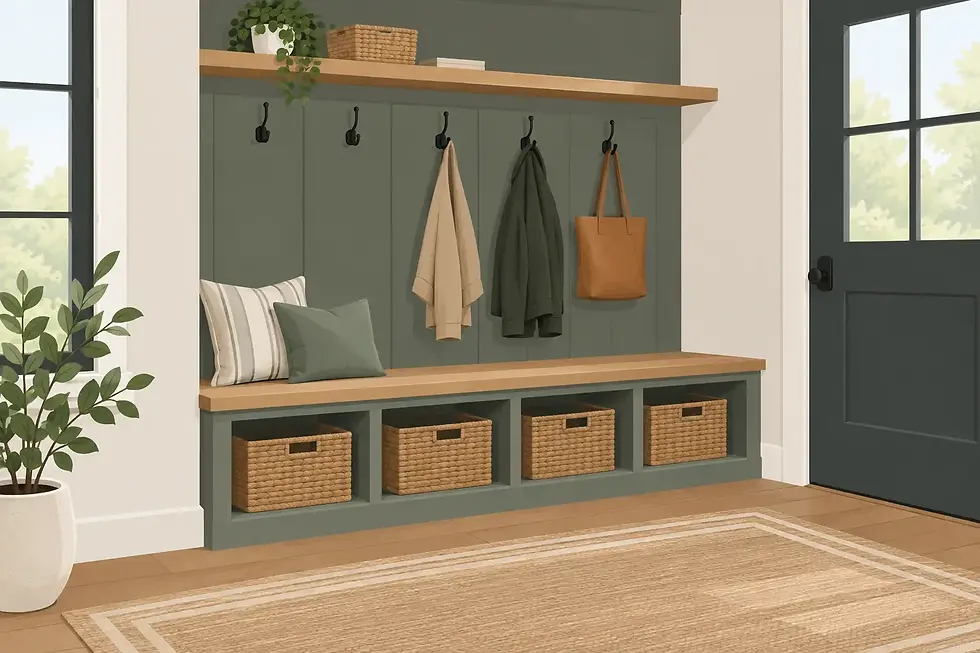
Custom cabinetry is cabinetry built specifically for your space, your storage needs, and your finish preferences. Instead of choosing from a fixed range of sizes, styles, and materials, you are having cabinets made to fit the room and the way you use it. That can mean a full custom kitchen, built-in storage around a fireplace, a mudroom bench with hidden compartments, or a bathroom vanity sized for a tight wall that standard units do not fit well.
The simplest way to understand it is this: stock cabinets are made for the average room, while custom cabinetry is made for your room.
What custom cabinetry means in practice
Custom does not just mean picking a paint color or choosing different hardware. It means the cabinet dimensions, box construction, door style, shelf layout, trim details, and installation approach are all selected with the project in mind.
In a kitchen, that might involve taking cabinetry to the ceiling, building around existing beams, creating deeper drawers for cookware, or adding a narrow pull-out beside the range so no space is wasted. In a living room, it might mean built-ins that look like they were part of the house from the start. In an entryway, it could be a storage wall that handles boots, coats, backpacks, and seasonal gear without making the space feel crowded.
This is where custom work earns its value. It solves room-specific problems cleanly, and it does it in a way that looks intentional rather than pieced together.
What is custom cabinetry compared to stock or semi-custom?
Most homeowners are really comparing three categories: stock, semi-custom, and fully custom cabinetry.
Stock cabinets
Stock cabinets are mass-produced in standard sizes and limited styles. They are usually the fastest and least expensive option. If your room is straightforward and your priorities are speed and budget, they can be a practical choice.
The trade-off is fit. Fillers, gaps, wasted corners, and awkward transitions are common when the room does not match standard dimensions.
Semi-custom cabinets
Semi-custom cabinets start from a manufacturer’s standard cabinet line but offer some flexibility. You may be able to adjust certain dimensions, choose upgraded materials, or select from a broader finish and door-style range.
For many projects, semi-custom is a reasonable middle ground. It offers more control than stock without the full cost of custom fabrication. The limitation is that you are still working within a system.
Fully custom cabinetry
Fully custom cabinetry is built from scratch for the project. Dimensions are not boxed into standard increments. Material choices are broader. Storage details can be tailored closely to how the homeowner lives.
That flexibility matters most when the room is unusual, the design goal is specific, or the finish quality needs to carry across the whole renovation.
Where custom cabinetry makes the biggest difference
Not every room needs custom work. But some spaces benefit from it almost immediately.
Kitchens are the obvious example because they carry so much daily use. A custom kitchen can improve workflow, increase usable storage, and create a cleaner visual line across walls, appliances, and trim. Small changes in drawer depth, cabinet height, or pantry configuration can have a big effect on how the room functions.
Built-ins are another strong case for custom. Bookshelves, entertainment walls, window benches, and home office storage rarely look right when forced from standard cabinet parts. When they are built to fit the room, they read more like architecture than furniture.
Mudrooms, laundry rooms, and bathrooms also benefit because those rooms often have tight footprints and very specific storage demands. A few inches gained through custom sizing can make a compact room noticeably easier to use.
Materials, construction, and finish quality
When people ask what is custom cabinetry, they are often also asking about quality. That answer depends on who is building it, but custom work generally allows for better control over materials and construction.
Cabinet boxes may be made from plywood, furniture-grade panels, or other durable sheet goods selected for the application. Doors and face frames can be built in hardwood species that fit the style of the home. Joinery, drawer hardware, and shelf supports can all be chosen based on expected use, not just price point.
Finish quality matters just as much as materials. A cabinet can be technically well built but still feel average if reveals are uneven, trim transitions are rough, or the installation leaves visible compromises. Good custom cabinetry should look clean at every line - where cabinets meet walls, where crown or filler pieces finish out, and where doors and drawers sit in relation to one another.
That is one reason homeowners often prefer working with a carpentry-led contractor for these projects. The result depends as much on field fitting and finish work as it does on the shop build.
Is custom cabinetry worth the cost?
Sometimes yes, sometimes no. It depends on the room, the house, and what you are trying to achieve.
If your priority is simply to replace worn cabinets in a standard kitchen with minimal changes, stock or semi-custom may be enough. But if your layout is inefficient, your walls are out of square, your ceilings vary, or you want the cabinetry to feel integrated with the rest of the renovation, custom usually makes more sense.
Custom cabinetry typically costs more because it involves more planning, more labor, more skilled fabrication, and a more detailed installation process. You are not just paying for materials. You are paying for fit, function, problem-solving, and finish.
For many homeowners, the real value shows up in daily use. Better storage, easier movement, stronger materials, and a finished look that suits the home can justify the added investment over time.
What to expect during a custom cabinetry project
The process usually starts with measurements, site conditions, and a clear conversation about how the space needs to work. This part matters. Good cabinetry begins long before anything is cut.
From there, the layout and design details are developed. That includes cabinet sizes, door and drawer locations, appliance clearances, trim details, and material selections. In a larger renovation, cabinetry planning also has to coordinate with flooring, lighting, plumbing, and electrical work.
Fabrication comes next, followed by finishing if the cabinets are painted or stained, and then installation. Installation is not just a delivery step. In many homes, walls are not perfectly straight, floors are not level, and corners are not square. Skilled installation is what makes custom cabinetry look built-in rather than dropped in.
For homeowners managing a broader renovation, it also helps when the same contractor understands both the finish carpentry side and the larger construction sequence. That reduces handoff issues and keeps details consistent from framing through final trim.
Signs custom cabinetry is the right choice
If your room has unusual dimensions, if storage is currently underperforming, or if you want cabinetry that matches the character of the home, custom is worth serious consideration.
It is also the right choice when standard cabinets would force visible filler strips, wasted wall space, or compromises around windows, stairs, sloped ceilings, and built-in features. Older homes especially tend to benefit because their layouts often do not cooperate with standard sizing.
And if finish quality matters to you, custom work gives you more control over the final look. That includes proportions, panel profiles, wood selection, paint-grade or stain-grade choices, and how the cabinetry ties into surrounding trim and millwork.
Common misunderstandings about custom cabinetry
One common assumption is that custom cabinetry is only for high-end show kitchens. It is not. While it can absolutely support premium design, it is also a practical solution for homeowners who need a room to work better.
Another misunderstanding is that custom always means ornate or highly decorative. In reality, some of the best custom cabinetry is simple. Clean lines, durable materials, smart storage, and precise installation often age better than trend-driven details.
The last misconception is that every project needs full custom. It does not. A good builder should be honest about where custom adds value and where a simpler approach will do the job well.
If you are weighing options for a kitchen, mudroom, built-in wall, or bathroom, the right question is not just what is custom cabinetry. It is what kind of cabinetry will make this room work better and look right for the house. When that answer calls for tailored fit, strong construction, and careful finish work, custom is usually the path that holds up best.


Comments