
10 Built In Cabinetry Ideas That Work
A blank wall can do a lot more than hold artwork. The right built in cabinetry ideas turn wasted square footage into storage that looks intentional, fits the house, and solves everyday problems without adding visual clutter.
For most homeowners, the question is not whether built-ins look good. They do. The real question is where they make the most sense, how far to take the design, and what details separate a custom installation from something that feels oversized or out of place. That is where planning matters.
Built in cabinetry ideas that add value
The best built-ins do two jobs at once. They improve function and make a room feel finished. When cabinetry is sized to the wall, aligned with trim, and built around how the room is actually used, it tends to feel like part of the home rather than furniture pushed into it.
That added value can show up in different ways. In a family room, it might mean hiding devices, games, and cords while framing a fireplace or media wall. In a mudroom, it might mean ending the daily pileup of boots, backpacks, and coats. In a dining area or kitchen, it might mean gaining storage that freestanding pieces cannot match.
Custom work also gives you control over depth, door style, shelf spacing, and finish details. That matters more than people expect. Even a few inches can determine whether cabinetry feels balanced or awkward in the room.
Start with the room, not the cabinet
A common mistake is choosing a built-in style before thinking through the room itself. Cabinetry should respond to architecture, traffic flow, ceiling height, and what needs to be stored.
Older homes often benefit from built-ins that respect existing trim profiles and proportions. Newer homes may suit cleaner lines and simpler faces. Neither approach is better on its own. It depends on the house and on how visible the cabinetry will be every day.
It also helps to be honest about use. Open shelves look good in photos, but they collect dust and require tidy styling. Deep cabinets hold a lot, but they can become catchalls if the layout inside is not planned. Drawers cost more than fixed shelves, but they usually perform better for heavier or smaller items.
Living room built in cabinetry ideas
Living rooms are one of the strongest places for built-ins because they often need storage without looking utilitarian. A full wall of lower cabinets with open shelving above is a classic solution. It keeps the room lighter than floor-to-ceiling cabinetry while still hiding electronics, board games, and seasonal items.
If the room has a fireplace, cabinetry on both sides can create symmetry and give the wall a purpose. This works especially well when the cabinet bases are solid and the upper section is kept more open. In tighter rooms, going too heavy on upper cabinets can make the whole wall feel crowded.
Media walls need careful planning. Screen size, speaker locations, venting, and access for wiring all need to be decided early. The finish matters too. A painted built-in can sharpen the look of the room, while stained wood adds warmth and can tie into flooring or stair details nearby.
Window seats with storage are another strong option in living rooms and front sitting areas. They make sense where a standard cabinet would block natural light or feel too tall. The trade-off is that seat storage is not as quick to access as drawers.
Kitchen and dining built in cabinetry ideas
Not every kitchen needs more wall cabinets. Sometimes the smarter move is adding built-ins just outside the main work zone. A pantry wall, a coffee station, or a built-in hutch in an adjacent dining area can ease pressure on the kitchen without forcing a full layout change.
A built-in banquette is one of the most practical ideas for family homes. It creates seating, often includes storage below, and uses corners more efficiently than freestanding furniture. It also helps define an eating area in open-concept spaces. The main consideration is comfort - seat depth, back angle, and table height need to be right or the feature will look better than it functions.
In dining rooms, lower cabinets with a countertop above can serve as buffet storage while keeping dishes, linens, and serving pieces close at hand. Glass upper doors can work if the contents are consistent and well organized. If not, solid doors usually age better.
Mudroom and entry built-ins
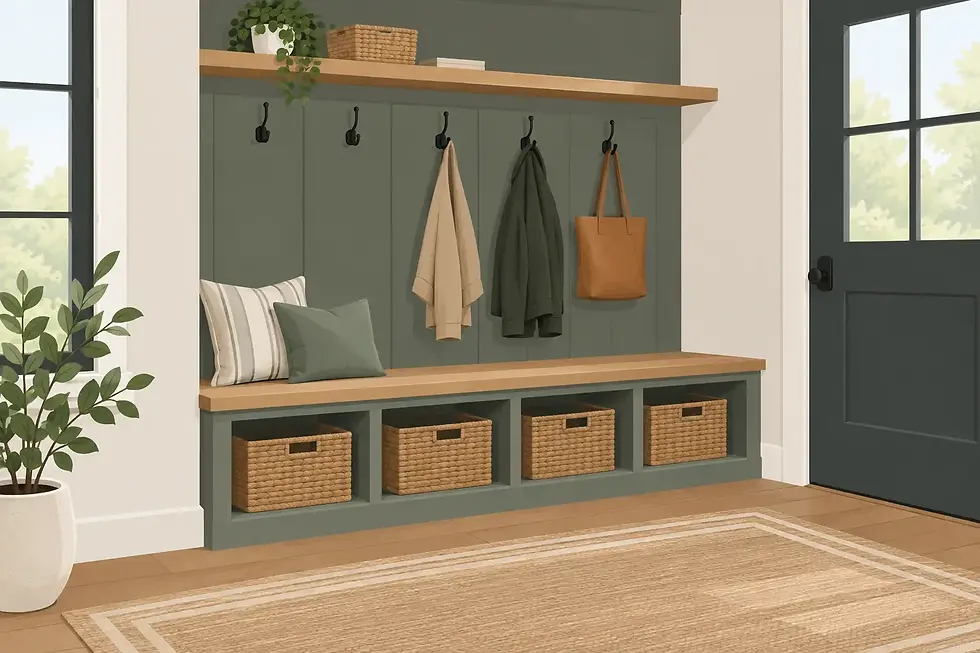
If there is one place where built-ins earn their keep quickly, it is the mudroom. This is where custom sizing matters most. Hooks placed at the right height, cubbies sized for real footwear, and benches with durable tops all make the room work harder.
A good mudroom layout separates drop zones by person or by task. Tall lockers suit families with coats and bags to manage. Lower drawers help with gloves, hats, and smaller items that otherwise disappear. Closed storage can keep the space looking cleaner, but a fully closed design is not always practical when wet gear needs airflow.
Durability should guide material choices here. Painted finishes are common, but this is a high-contact area, so the build quality and prep work matter. Strong joinery, good hardware, and surfaces that can handle repeated use are more important than decorative extras.
Bedroom and home office built-ins
Built-ins in bedrooms are useful when closet space is limited or when a wall shape makes standard furniture inefficient. Around-bed cabinetry can create a custom look and add storage, but it needs to be scaled carefully. Done poorly, it can make the room feel boxed in.
A better option in many bedrooms is a window wall with lower drawers, bookshelves, or a desk integrated into the millwork. That gives the room function without crowding the sleeping area.
Home office built-ins are often worth the investment because they reduce visual noise. File storage, printer cabinets, floating shelves, and a properly sized desktop all help the room perform better. The biggest mistake here is underestimating equipment. Monitors, chargers, task lighting, and paper storage all need a place before the cabinetry is built.
Built in cabinetry ideas for awkward spaces
Some of the best built-ins happen where furniture never quite works. Under stairs, beside chimneys, in upper hallways, and along short wall sections, custom cabinetry can turn dead zones into usable storage.
Under-stair cabinets are especially effective in homes where entry storage is limited. Depending on the stair structure, you can create doors, pull-out drawers, or a combination of both. This type of work takes careful measuring and clean finish carpentry, because odd angles show mistakes quickly.
Alcoves are another opportunity. Rather than forcing a store-bought cabinet into a niche, a built-in can be sized exactly to the opening and finished to match surrounding trim. That kind of fit is one of the clearest differences between custom and off-the-shelf solutions.
Finish details that make built-ins look custom
Good built-ins are not just boxes attached to a wall. The details are what make them look like part of the home.
Alignment is one of the biggest factors. Cabinet runs should relate to windows, doors, ceiling lines, and baseboards. If the proportions are off, even expensive cabinetry can feel wrong. Filler pieces, scribes, and trim transitions should look intentional, not like afterthoughts.
Door style should suit the house. Shaker fronts are versatile, but they are not the only answer. Slab doors can work in modern interiors. More traditional homes may call for a profile with more depth. Hardware should be practical and proportionate, not oversized for the sake of trend.
Paint versus stain is another decision that depends on the room. Paint can tie built-ins into trim and give a cleaner architectural feel. Stain highlights wood character and can bring warmth, but it also makes species selection and grain consistency more visible.
When built-ins are worth it
Built-ins usually make the most sense where the room has a clear storage problem, an obvious architectural opportunity, or both. They are less compelling when the goal is only to fill space. Custom cabinetry should solve a need, improve layout, or create a finish level the room currently lacks.
They are also worth it when you want continuity across a larger renovation. Matching cabinetry to a kitchen update, staircase work, or surrounding trim can make the whole house feel more cohesive. That is often where skilled carpentry has the most visible payoff.
Heritage Green Carpentry sees this firsthand on renovation projects where one well-planned built-in changes how a room works every day. The best results come from balancing storage, scale, and finish quality rather than chasing a trend.
If you are considering built-ins, start with the wall that bothers you most or the room that never seems organized. The right solution is usually less about adding more cabinetry and more about building the right cabinetry for the way you live.


Comments