
General Contractor vs Carpenter Explained
A lot of renovation problems start before the first board is cut. A homeowner knows they want a better kitchen, a new deck, or a staircase that feels solid and looks finished, but they are not always sure who to call first. That is where the question of general contractor vs carpenter matters. The right choice affects budget, timeline, communication, and the final quality of the work.
The short answer is this: a general contractor manages the full project, while a carpenter builds and installs wood-based components and structural or finish details. On some jobs, those roles are separate. On others, one company handles both, which can make the process more efficient and the finished work more consistent.
General contractor vs carpenter: what is the difference?
A general contractor is responsible for the larger scope of a renovation or build. That usually means planning the sequence of work, scheduling trades, managing materials, coordinating permits when needed, and keeping the project moving. If your project includes demolition, framing, electrical, plumbing, drywall, flooring, painting, and finish work, a general contractor is the person or company overseeing how all of those pieces fit together.
A carpenter works directly with wood and related building materials. Depending on the project, that can mean framing walls, building stairs, installing trim, constructing a deck, fitting cabinetry, or creating custom built-ins. Some carpenters focus on rough structural work. Others specialize in finish carpentry, where precision, clean lines, and visible detail matter most.
The confusion comes from the fact that many skilled carpentry businesses also act as general contractors. That is especially common in custom residential work, where the same team may build the cabinetry, install the staircase, frame the addition, and coordinate the rest of the renovation. In that case, you are not choosing one or the other so much as choosing the level of service and scope you need.
When you need a general contractor
If your project involves multiple trades or several phases of work, a general contractor usually makes sense. A kitchen remodel is a good example. Even if the focal point is custom cabinetry and woodwork, the job may also include electrical changes, plumbing moves, drywall repair, flooring, tile, and painting. Someone needs to coordinate that sequence so one trade is not waiting on another and the finished surfaces are protected.
A full basement renovation, major bathroom remodel, home addition, or whole-home update also falls into this category. These projects have a lot of moving parts. Hiring each trade separately can work if you have experience managing construction, time to stay on top of scheduling, and confidence making decisions quickly. Most homeowners would rather have one point of contact.
A strong general contractor also helps with the practical side of renovation. That includes realistic budgeting, spotting site issues early, ordering materials in the right sequence, and keeping quality consistent from one stage to the next. Good project management does not replace craftsmanship, but it does protect it.
When you need a carpenter
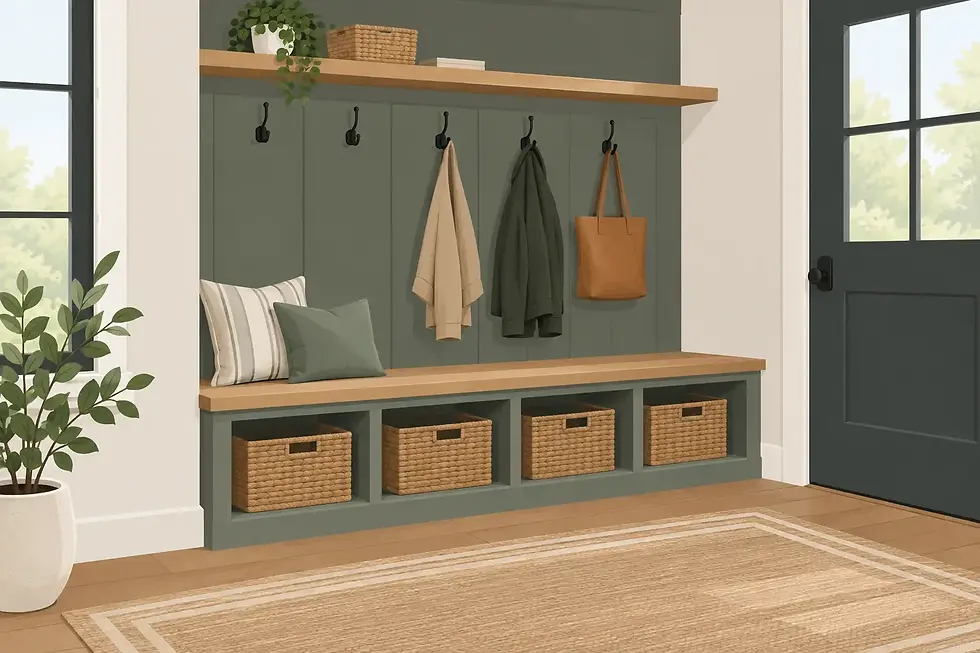
If the work is focused and wood-driven, a carpenter may be exactly who you need. Think custom built-in shelving, a mudroom bench, trim and finish upgrades, a staircase rebuild, a deck replacement, or a one-room feature wall with integrated storage. In these cases, the value is in the build quality, fit, and finish.
This is where specialization matters. A finish carpenter notices reveals, alignment, transitions, edge details, and how the final work will look in natural light. A staircase is not just a set of treads and risers. It has to feel solid underfoot, meet code, and look right from every angle. The same is true for cabinetry and built-ins. Small measurement errors show up fast once doors, panels, and trim go in.
For homeowners investing in custom work, the carpenter is often the craftsperson shaping the visible result. If the project does not require broader coordination, hiring a carpenter directly can be the simpler route.
General contractor vs carpenter for common home projects
For a custom deck, it depends on complexity. If it is a straightforward replacement with stairs, skirting, and rail details, a carpenter or carpentry-led contractor may be the right fit. If the project includes excavation, multiple elevations, roof structures, lighting, or a broader outdoor living plan, general contracting becomes more useful.
For a kitchen, many homeowners start by thinking about cabinets, but the project usually reaches beyond carpentry. Layout changes, appliance planning, electrical updates, plumbing, surfaces, and finishing trades all need to line up. That usually points toward a general contractor, ideally one with strong carpentry capability if custom cabinetry or detailed millwork is part of the plan.
For staircases, built-ins, and finish upgrades, carpentry is often the center of the job. The more custom the design, the more important it is to work with someone who understands both function and finish quality.
For whole-home renovations or additions, general contracting is essential. There are too many steps, too many dependencies, and too much risk in leaving coordination loose.
The trade-off homeowners should understand
The choice is not just about job titles. It is about where the value sits in your project.
A general contractor brings structure. That helps reduce delays, miscommunication, and overlap between trades. The trade-off is that not every general contractor is deeply hands-on in finish work. Some are excellent managers but rely entirely on subcontractors for the visible details.
A carpenter brings direct craft skill. That helps when the quality of the woodwork is the main priority. The trade-off is that a carpenter working alone may not be set up to manage a renovation involving several other trades, permit steps, or a complex timeline.
For many homeowners, the best fit is a company that can do both - manage the renovation properly and execute high-quality carpentry in-house. That is especially useful when custom kitchens, staircases, built-ins, or exterior structures are part of a larger project. You get continuity from planning through finishing, and the details do not get treated as an afterthought.
How to choose the right fit
Start with scope. Ask yourself whether you are hiring for a specific piece of work or for the full execution of a renovation. If several trades are involved, you need project coordination, not just installation.
Then look at where quality is most visible. If the success of the project depends heavily on custom woodwork, built-ins, stair details, or finish carpentry, make sure the person leading the job has proven skill in that area. A clean schedule matters, but so does the final line of a handrail and the fit of a cabinet panel.
It also helps to ask practical questions early. Who is handling permits if they are required? Who orders materials? Who manages scheduling? Who is actually building the custom components? Homeowners often assume all of that sits with one company, but that is not always the case.
Review past work with a critical eye. A contractor can say they do kitchens or decks, but the photos usually tell you more. Look for consistent detailing, solid proportions, clean transitions, and projects that match the level of finish you want in your own home.
If you are planning a renovation in places like Smiths Falls, Perth, or the surrounding area, this distinction becomes even more practical. Many homeowners are not looking for a volume remodeler. They want a contractor who can manage the work while still caring about the visible craftsmanship. That combination tends to lead to better results, especially in older homes and custom spaces.
One last point on general contractor vs carpenter
You do not need to memorize trade definitions to make a good hiring decision. What matters is knowing whether your project needs management, craftsmanship, or both. If the job is broad, make sure someone is truly set up to coordinate it. If the job is detail-driven, make sure the finish work is in capable hands. The best renovation experience usually comes from hiring for the actual demands of the project, not just the label on the truck.
When the work is planned well and built well, you feel it every day - in a kitchen that functions properly, a staircase that feels solid, or a deck that looks like it belongs with the house.


Comments