
What Is a Semi Custom Kitchen?
If you're pricing out a kitchen renovation and keep seeing the phrase what is semi custom kitchen, you're probably already noticing the gap between budget cabinets and fully custom work. That middle ground is where many homeowners land - especially when they want better fit, better finish, and more control without paying for every cabinet to be built from scratch.
A semi-custom kitchen sits between stock cabinetry and full custom cabinetry. The cabinet line starts with standard sizes and established construction methods, but gives you room to adjust dimensions, finishes, storage features, trim details, and layout options. In plain terms, you are not designing every box from zero, but you are also not limited to whatever happens to be sitting in a warehouse.
For many remodels, that balance makes a lot of sense. You get more flexibility where it matters, while keeping cost and lead time more manageable than a fully custom build.
What is semi custom kitchen cabinetry?
The simplest answer is this: semi-custom kitchen cabinetry is made from a manufacturer's standard cabinet system, with a menu of modifications and upgrades. Those options vary by supplier, but they often include changes to width in set increments, depth adjustments, door styles, paint or stain selections, interior pullouts, crown molding, end panels, and specialty storage pieces.
That matters because most kitchens are not perfectly standard. Walls shift. Ceiling heights vary. Appliance sizes change. Homeowners want better pantry storage, deeper drawers, cleaner trim lines, or an island that actually works for how the family uses the space. Semi-custom cabinetry gives you more ways to solve those issues than stock products can.
It does have limits. If a room is badly out of square, if the design needs unusual dimensions, or if you want furniture-style details throughout, semi-custom may still require fillers, panels, or some custom carpentry to make the final result look right.
How semi-custom compares to stock and full custom
Stock cabinets are the most restricted option. They come in fixed sizes, limited colors, and fewer construction choices. They can work well in straightforward layouts, especially when budget is the top priority. The trade-off is fit. A stock kitchen often needs more filler strips and compromises in storage, and those small compromises are what people notice later.
Full custom is the opposite end of the range. Cabinets are built specifically for the room and project. That means nearly complete freedom over dimensions, materials, joinery, finish, and detailing. If you want a kitchen wrapped around awkward architecture, integrated with built-ins, or tailored to a very specific design vision, custom is hard to beat.
Semi-custom lands in the middle. It gives homeowners more design freedom than stock, but within an existing cabinet program. That usually means a cleaner fit, more finish choices, and better function without the cost of a completely bespoke shop build.
This is why semi-custom is often the practical choice for kitchen remodels. You can put budget where it will have the most visible impact, then use targeted custom work only where the room really needs it.
What you can usually customize
When homeowners ask what is semi custom kitchen design really buying me, the answer is usually flexibility in the details that affect daily use.
Most semi-custom lines let you choose from a broader range of door profiles, wood species, painted finishes, stains, hardware compatibility, drawer configurations, and storage accessories. You may also be able to modify cabinet height or width in smaller increments than stock lines allow. That can make a major difference around a refrigerator wall, a sink run, or an island where every inch counts.
You can also often add practical features like rollout trays, tray dividers, spice pullouts, waste sorting cabinets, appliance garages, and deeper pot drawers. These are not just showroom upgrades. They change how the kitchen works every day.
What you usually cannot do is request anything at all. If you want one cabinet built to an unusual depth, another with a nonstandard face frame detail, and another with a furniture base that matches a staircase newel, that starts pushing into custom territory.
Where semi-custom works best
Semi-custom kitchens tend to work best when the layout is important but not extreme. A standard L-shape, U-shape, galley, or open-concept kitchen can often be handled very well with semi-custom cabinetry, especially if the design is planned carefully from the start.
They are also a strong fit for homeowners who care about finish quality and storage, but do not need every surface and cabinet dimension to be one-off. If your priority is a kitchen that looks tailored, functions well, and holds up over time, semi-custom can deliver strong value.
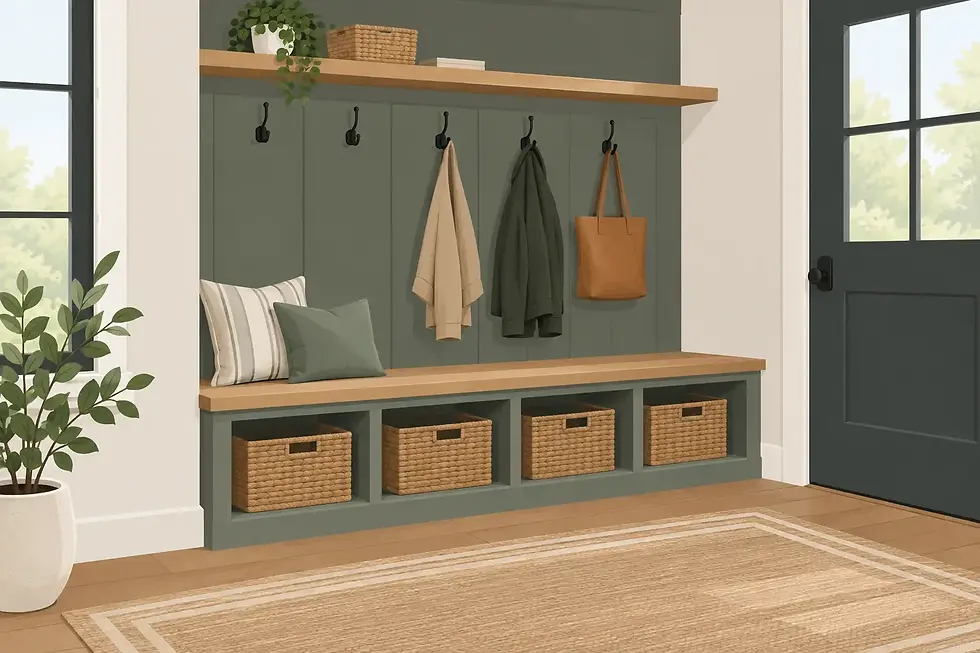
It is also useful in renovation projects where some parts of the job are custom and some are not. For example, the main cabinet run may be semi-custom, while a hood surround, floating shelves, island panels, or a mudroom transition piece is built by a carpenter to tie the entire space together. That mixed approach often gives the room a more finished look than cabinetry alone.
Where semi-custom can fall short
The term semi-custom can sound more flexible than it really is, so it helps to go in with realistic expectations.
If your kitchen has unusual ceiling lines, heavily uneven walls, old-house quirks, or a design that depends on exact millwork alignment, standard cabinet programs may not get you all the way there. The kitchen can still be built, but it may need more fillers, trim work, and site adjustments to look intentional.
Lead time is another consideration. Semi-custom cabinetry is usually slower than stock because selections and modifications are being processed through a production schedule. It is still often faster than full custom, but not always by much, depending on the supplier and season.
There is also a pricing gray area. Once enough upgrades are added - better box construction, specialty storage, decorative end panels, paint upgrades, glass inserts, custom moldings - the total can start approaching entry-level custom pricing. At that point, it is worth comparing the real value of each route instead of assuming semi-custom is automatically the lower-cost choice.
What affects the cost most
Cabinet pricing is not just about whether the line is stock, semi-custom, or custom. The biggest cost drivers are usually kitchen size, material quality, finish type, drawer and hardware upgrades, internal storage accessories, and installation complexity.
Painted finishes often cost more than standard stains. Large drawer banks cost more than simple door cabinets. Specialty organizers raise price quickly. So do decorative panels and trim packages that make appliances and islands look more built-in.
Installation matters too. A semi-custom cabinet line installed with care will usually perform and look better than a more expensive product installed poorly. Scribing to uneven walls, setting reveals consistently, aligning doors and drawer fronts, and finishing the trim cleanly are where craftsmanship shows.
That is one reason many homeowners prefer working with a contractor or carpenter who understands both the cabinetry and the surrounding renovation work. The cabinets are only one part of the room. Flooring transitions, lighting placement, trim details, soffit removal, and appliance fit all affect the final result.
How to know if semi-custom is right for your kitchen
Start with the room, not the label. If your kitchen needs moderate flexibility, better storage, and a more tailored appearance than stock can offer, semi-custom is worth serious consideration. If the room has difficult architecture or the design vision depends on exact built-in detailing, full custom may be the better fit.
It also helps to think about where customization matters most to you. Some homeowners care most about finish and door style. Others care about squeezing every bit of function into a smaller footprint. Others want a kitchen that blends with custom trim, built-ins, or adjacent renovation work. Once those priorities are clear, the right cabinet path usually becomes clearer too.
A good design and build team should be able to show you where semi-custom will work well, where custom additions would improve the result, and where you're paying for upgrades that may not change much in daily use.
What is semi custom kitchen planning really about?
At the planning stage, what is semi custom kitchen design really comes down to is choosing where standardization helps and where customization earns its keep. Not every project needs every cabinet built from scratch. But very few good kitchens come from forcing a standard solution into a room that deserves better.
The best outcome usually comes from matching the cabinet system to the house, the layout, and the way the kitchen is actually used. In many homes, that means semi-custom cabinetry paired with thoughtful design and precise finish work.
If you're investing in a kitchen renovation, focus less on the label and more on the fit, function, and finish you will live with every day. That is where the value shows up long after the project is done.


Comments